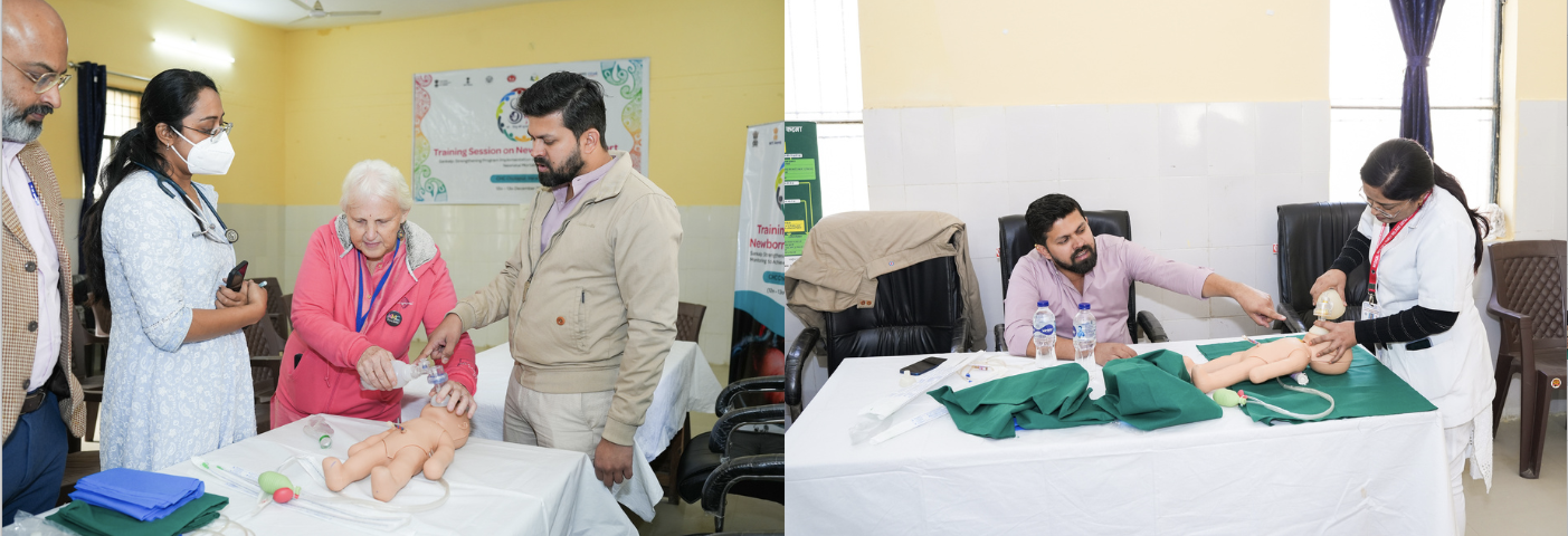
Bridging The Gap Between Facility And Community Newborn Care: Strengthening The Continuum For Preterm And LBW Infants Through FSP TTH+
27
Apr
2025


Introduction: About the LIFT-UP Study
The Low Birthweight and Preterm Infant Feeding Trial and Supportive Care Package (LIFT-UP) is a global implementation research initiative aimed at improving outcomes for vulnerable newborns. Conducted in India, Malawi, and Tanzania, the study focuses on feeding practices and supportive interventions both at healthcare facilities and within communities.
In India, LIFT-UP is operational across three prominent institutions in Uttar Pradesh: KGMU Lucknow, GSVM Medical College Kanpur, and IMS-BHU Varanasi. The continuum of care spans from labor rooms to SNCUs/NICUs and continues into home-based follow-up via community health systems.
Rationale for FSP TTH+
While facility-based newborn care has seen considerable progress, many LBW and preterm infants remain at risk once discharged. The Transition to Home Plus (TTH+) model bridges this critical gap by reinforcing facility-initiated care with structured community-level interventions. FSP TTH+ is an integrated care package designed to ensure newborns thrive post-discharge.
Key Components of FSP TTH+
- Promotion of Mother’s Own Milk (MOM) and Donor Human Milk (DHM)
- Kangaroo Mother Care (KMC) at home
- Breastfeeding and lactation support
- Psychosocial support for caregivers
- Water, sanitation, and hygiene (WASH) practices
- Growth monitoring and early danger sign recognition
- Structured discharge planning and follow-up mechanisms
Training of Trainers (ToT): 28–30 April 2025
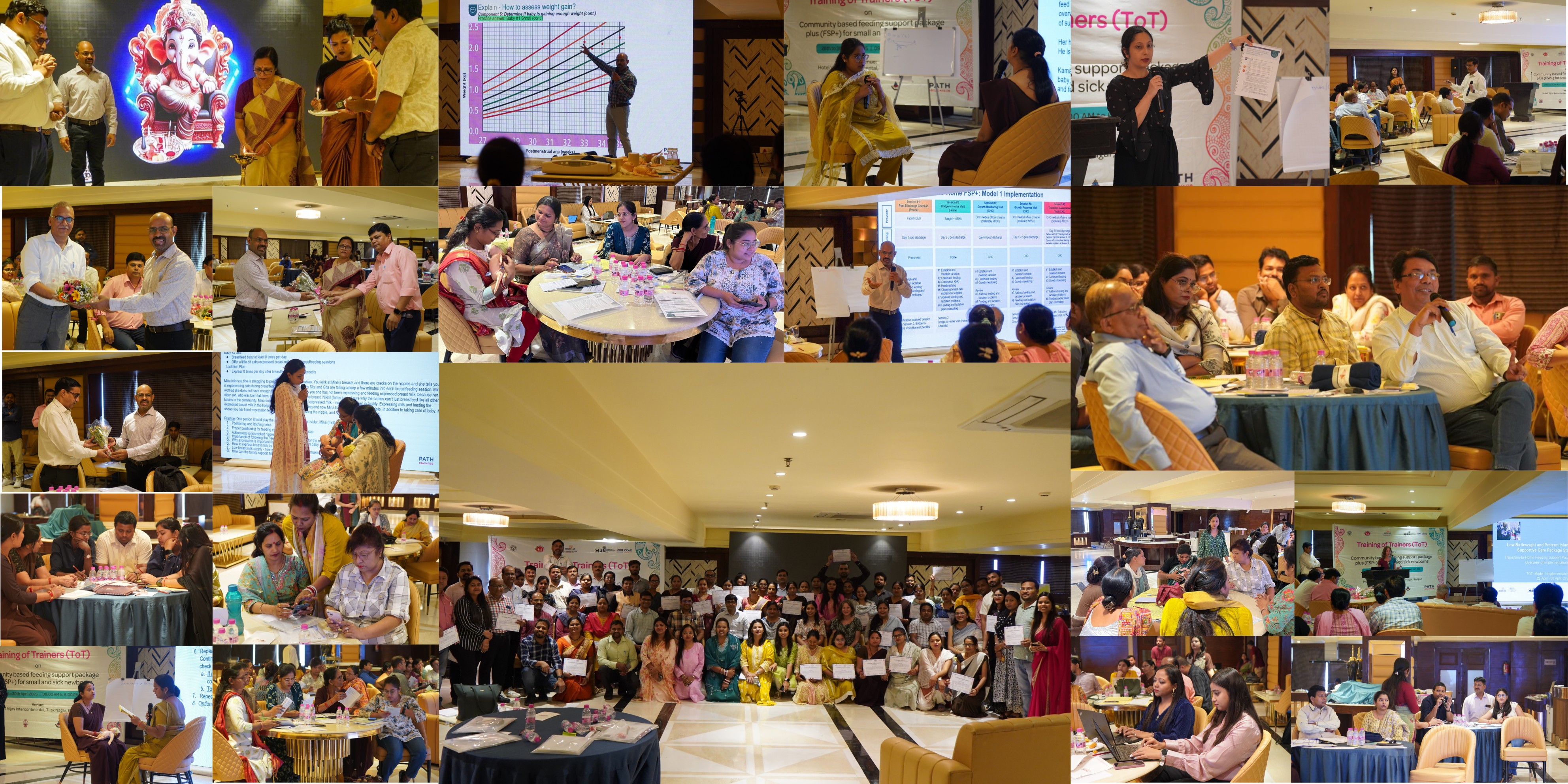
Held in Kanpur, this competency-based training engaged over 73 participants, including MOICs, BPMs, CHOs, nurses, Sanginis, and GSVM staff from 9 rural blocks in Kanpur Nagar and Dehat. The training emphasized provider readiness for delivering essential newborn care in community settings.
Highlights from the Training
The thematic focus areas included:
- Early identification of neonatal danger signs
- Breast milk expression and storage techniques
- Counseling for breastfeeding difficulties
- Mental health and emotional support for mothers
- WASH and infection prevention
- Growth monitoring and charting weight velocity
- Family-centered care with involvement of fathers and grandmothers
- Use of newborn care “Passport” and Feeding Logs for follow-up
Innovative Learning Methods
Participants engaged in:
- Case-based discussions
- Role plays and real-life simulations
- Quizzes and practical assessments
These methods brought real-world complexity to the training and helped address unique challenges such as twins, family dynamics, and community beliefs.
Monitoring and Feedback
A mobile-based pre- and post-training survey with barcode integration was conducted to evaluate knowledge retention. The data guided improvements and captured immediate impact.
Next Steps
Following the ToT, cascade training will be conducted for ASHAs, Sanginis, CHOs, CHC staff, and GSVM College staff. Approximately 1600–1700 personnel across 9 blocks will be trained, further strengthening community newborn care across the region.
Follow Us on Social Media for More Updates!
Facebook: CommunityEmpowermentLab

Instagram: @communityempowermentlab_cel
X (Twitter): @Community_Lab
LinkedIn: Community Empowerment Lab